Property Assessment Process in Mahoning County, Ohio
 Posted On
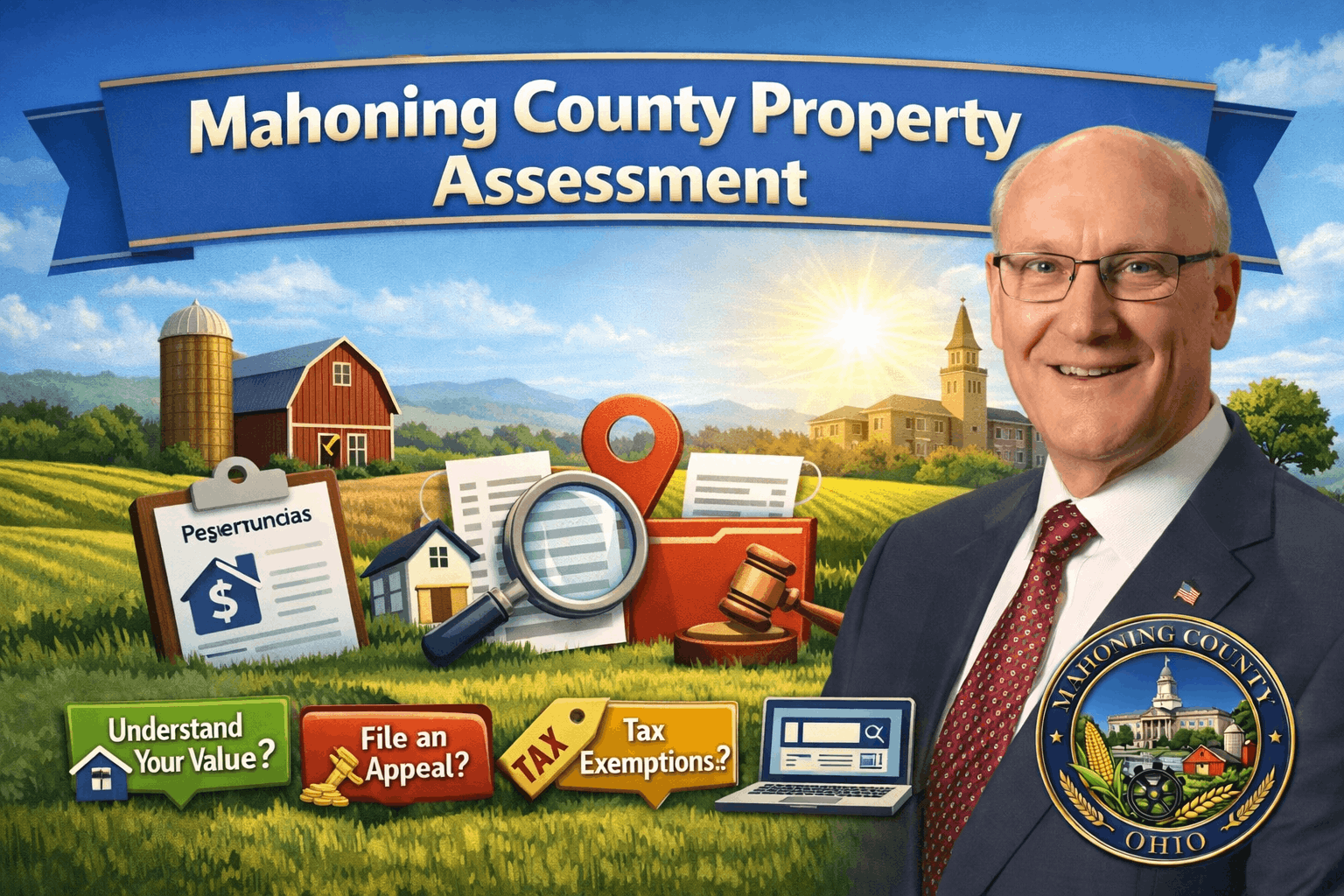
Understanding how property values are determined in Mahoning County can help you plan better and avoid paying more than necessary. The Mahoning County Auditor calculates assessed values based on market value, in accordance with Ohio law, and this assessment forms the basis of your annual property tax bill. Knowing this process helps homeowners make informed and confident property decisions.
How the Mahoning County Property Assessment Process Works
In Mahoning County, property assessment ensures that property taxes are fair, accurate, and applied equally to all property owners. The County Auditor’s Office oversees this process by maintaining detailed records on each property, including size, use, condition, and improvements. Property values are estimated using recent sales data and comparable properties to reflect current market conditions. Under Ohio law, the assessed value is calculated as a percentage of the market value and used to determine property taxes. Properties are reviewed and updated on a regular basis, and property owners may review their records or file an appeal if they believe their assessment is incorrect. Public access to assessment records supports transparency and trust in the taxation process.
Step 1: Who Assesses Property Values in Mahoning County
In Mahoning County, property values are assessed by the County Auditor’s Office. This office is responsible for reviewing property records, analysing market data, and maintaining accurate property values for tax purposes. The Auditor ensures that all properties are assessed fairly and in accordance with Ohio state law.
Your Role
As a property owner, you can:
- Verify your property details like size, type, and condition.
- Check for errors in the assessment notice.
- Know your rights to appeal if the value seems incorrect.
- Keep records of improvements or renovations for accuracy.
Example Table: Who Assesses What
| Property Type | Responsible Office | Notes |
|---|---|---|
| Residential | Mahoning County Auditor | Homes, condos, townhouses |
| Commercial | Mahoning County Auditor | Offices, retail, warehouses |
| Agricultural | Mahoning County Auditor / CAUV | Valued under Ohio CAUV program |
Step 2: How Property Data Is Collected and Reviewed
The Mahoning County Auditor collects property data from multiple reliable sources, including property records, field inspections, building permits, and information provided by property owners. This data is carefully reviewed to ensure accuracy and consistency. Regular updates help reflect changes such as new construction, renovations, or land use adjustments, keeping property records current and reliable for assessment purposes.
- Field Inspections: Trained appraisal staff review properties with reported changes, such as new construction or renovations, to update physical characteristics.
- Online Records: The Mahoning County Auditor uses GIS maps, parcel data, and prior assessment records to verify and confirm property details.
- Owner-Provided Information: When property owners report improvements or changes, the Auditor’s Office reviews the submitted information to ensure records remain accurate.
These steps help ensure every property is evaluated consistently and fairly during regular updates or reappraisals.
Your Role
Check your property facts online, report changes accurately, and respond promptly to Auditor notices to keep your assessment correct.
Step 3: How Market Value Is Determined
Market value reflects what a property would likely sell for under normal market conditions. The Auditor evaluates:
- The Auditor reviews recent sales of similar properties in Mahoning County.
- Local market trends and neighborhood factors are analyzed.
- Property features such as size, condition, and improvements are considered.
- All these factors are combined to estimate the market value, reflecting what the property would likely sell for.
- This ensures fair and accurate assessments for property tax purposes.
By comparing your property with comparable sales, the Auditor establishes a fair market value that represents its true worth. Regular reassessments ensure values stay accurate and reflect current market conditions.
Step 4: How Assessed Value Is Calculated
Once the market value of a property is determined, the Mahoning County Auditor calculates its assessed value. Under Ohio law, this is done by applying a specific percentage of the market value, which becomes the basis for the property tax bill. This calculation ensures that taxes are fairly proportioned according to the property’s estimated worth.
Example Calculation
Market Value: $200,000 (estimated by the Auditor based on comparable sales and property features)
Assessment Percentage: 35% (as per Ohio law)
Assessed Value: $200,000 × 0.35 = $70,000
Property Taxes: Calculated by applying the local tax rate to the assessed value
This example shows how a property’s market value is converted into an assessed value, which forms the basis for Mahoning County property taxes.
Step 5: When Property Assessments Are Updated
In Mahoning County, property assessments are regularly updated to reflect changes in the market, improvements, or other property updates. The County Auditor reviews properties periodically, ensuring that the assessed value stays accurate and fair. Homeowners can also report changes or improvements, which are reviewed and incorporated into the next assessment cycle.
Last full reappraisal: Tax Year 2023 (values reflected in 2024 tax bills)
Most recent triennial update: Tax Year 2026 (values reflected in 2027 tax bills)
Next full general reappraisal: Tax Year 2029 (values available late 2029, affecting 2030 taxes)
These updates help maintain accuracy and fairness in property assessments, ensuring your tax reflects current market trends.
Step 6: How Property Assessment Affects Taxes
In Mahoning County, a property’s assessed value directly determines how much property tax the owner will pay. The higher the assessed value, the higher the tax, based on local tax rates. Accurate assessments ensure that each property pays its fair share, while reassessments and updates reflect market changes, improvements, or new construction. Understanding this process helps homeowners plan financially and avoid surprises on their tax bills.
Accurate assessments ensure fair taxation, while any changes in market value or improvements can increase or decrease the taxes owed.
Your Role
- Verify Property Details: Check the property’s square footage, number of bedrooms and bathrooms, and any tax exemptions.
- Compare with Similar Properties: Look at comparable local properties to ensure your assessment is fair.
- Identify Discrepancies: Note any differences or errors and gather supporting documents, such as recent appraisals or improvement records.
- File an Appeal: Submit an appeal with the Mahoning County Auditor’s Office if you believe the assessment is incorrect.
Step 8: How to Appeal Your Property Value
If you believe your property is overvalued, you have the right to file an appeal with the Mahoning County Auditor’s Office online or in person.
Appeal Process Overview:
- Appeal Deadline: Submit your appeal between January 1 and March 31.
- Provide Supporting Evidence:
- Recent sale prices of comparable properties
- Photos showing your property’s current condition
- An independent appraisal report
- Attend a Hearing: Explain your case if requested by the Auditor or the Board of Revision.
- Receive a Decision: The Auditor or Board reviews your appeal and issues a final determination.
Your Role
Submit appeal on time, provide clear evidence, attend hearings if needed, and follow up to ensure your assessment is corrected accurately.
Step 9: Apply for Exemptions or Credits
Mahoning County property owners may qualify for exemptions or credits like homestead, senior, veteran, or agricultural. Submit the required forms to the Auditor’s Office to reduce your property taxes.
Popular Mahoning County Programs:
- Homestead Exemption: Reduces taxes for eligible homeowners on their primary residence.
- Senior Citizen Credit: Provides tax relief for senior property owners.
- Veteran Exemption: Offers partial or full tax exemption for qualified veterans.
- Agricultural (CAUV) Program: Assesses farmland based on use value, lowering taxes for active farms.
- Disability Exemption: Reduces taxes for property owners with qualifying disabilities.
Your Role
Check annual eligibility, accurately complete exemption forms, and submit them to the Auditor’s Office to lower your property taxes efficiently.
Step 10: Stay Informed and Monitor Your Property Record
Regularly check your Mahoning County property record to ensure details, assessed values, and exemptions are accurate. Staying informed helps you catch errors early and take action if needed.
- Search your property by owner name, address, or parcel number.
- View your property’s market and assessed values.
- Estimate your annual property taxes using available online tools.
- Track exemptions, credits, or appeal filings.
- Stay updated on reassessments and property record changes.
Conclusion
Understanding your property’s value and assessment in Mahoning County helps you make informed decisions and ensures you pay fair taxes. By regularly reviewing your property record, staying aware of exemptions and credits, and knowing how to appeal, you can confidently manage your property responsibilities and take full advantage of available tax relief programs.
FAQs
1. How often are property assessments updated in Mahoning County?
Properties are reviewed regularly, with a full countywide reappraisal every six years and triennial updates in between to reflect market changes and improvements.
2. Who determines my property’s assessed value?
The Mahoning County Auditor’s Office reviews property details, market data, and comparable sales to calculate assessed values according to Ohio law.
3. Can I appeal my property assessment?
Yes. If you believe your property is overvalued, you can file an appeal with the Auditor’s Office between January 1 and March 31 with supporting documentation.
4. What exemptions or credits are available?
Common programs include Homestead Exemption, Senior Citizen Credit, Veteran Exemption, Agricultural (CAUV) Program, and Disability Exemption.
5. How can I check my property record?
You can search by owner name, address, or parcel number on the Mahoning County Auditor’s website, view assessed values, track exemptions, and monitor appeals.
6. Why is it important to monitor my property record?
Regular monitoring ensures your information is accurate, helps catch errors early, and allows you to take action if updates, appeals, or exemptions are needed.